Collection: Conventional Reels

Shop conventional reels for trolling, bottom fishing and offshore use, including level-wind, line-counter, star-drag and heavy-duty options.

Choosing the Right Conventional Fishing Reel

The right conventional reel depends on how you fish, the line capacity you need, the drag system you prefer and the species you target.

Level-wind reels distribute line across the spool automatically and are popular for trolling and general boat fishing. Star-drag reels use a traditional drag-adjustment wheel and work well for bottom fishing, jigging and other conventional applications. Lever-drag reels allow quick, repeatable drag adjustments and are widely used for heavier offshore fishing.

Start with the fishing technique, then compare reel size, line capacity, drag, gear ratio and retrieve before choosing a model. Browse our fishing line collection for braid, monofilament and fluorocarbon options suited to conventional reel setups.

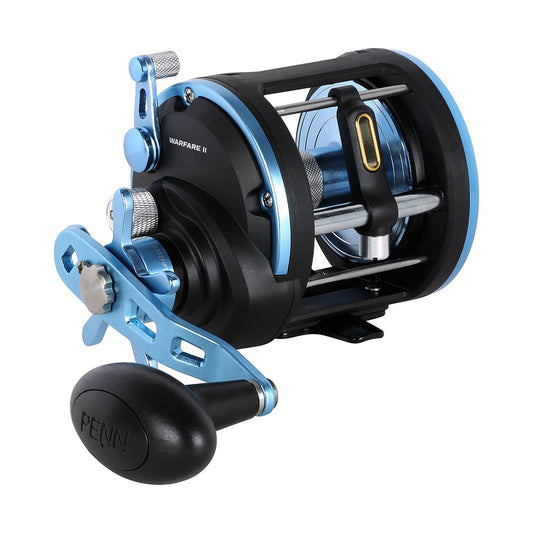
  • PENN Rival II level wind conventional reel family

    Level Wind / Line Counter

    Easy line management with options for repeatable trolling distance

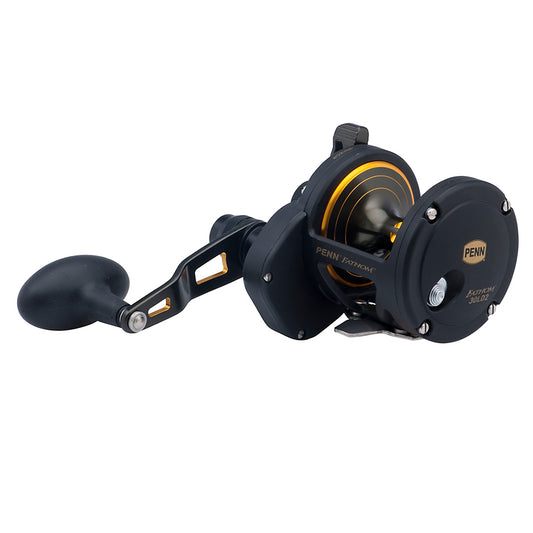
  • Daiwa Saltist Star Drag 20 conventional fishing reel

    Star Drag

    Direct drag adjustment for bottom fishing, jigging and general saltwater use

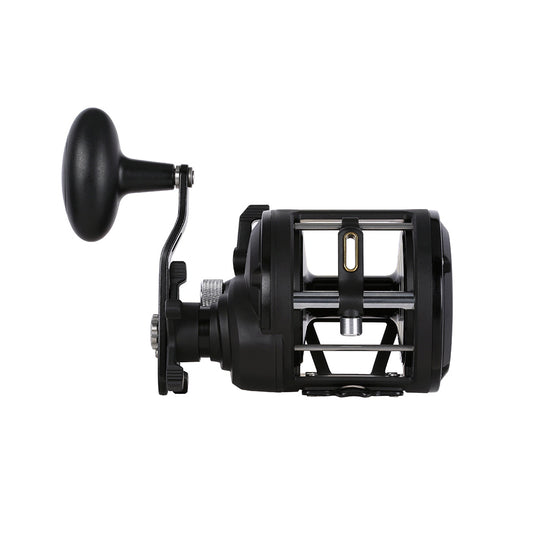
  • Abu Garcia C3 Striper Special 6500 round baitcast reel for striped bass

    Round Conventional

    Classic revolving-spool design for trolling, bait fishing and heavier setups

Buying Guide & FAQs

Level-Wind & Line-Counter Reels

Level-wind conventional reels guide line evenly across the spool during the retrieve, which can make line management easier when trolling or fishing from a boat.

Some models also include a line counter that tracks the approximate amount of line released from the reel. This can help anglers repeat trolling distances or place a bait at a consistent depth when the rest of the setup is held constant.

Line counters should be treated as a reference rather than an exact depth measurement because lure design, line type, speed, current and other factors affect actual running depth.

Star-Drag Conventional Reels

Star-drag reels use a star-shaped adjustment wheel near the handle to increase or reduce drag pressure.

They are widely used for bottom fishing, jigging, bait fishing and general conventional applications because the drag can be adjusted easily while maintaining a simple, familiar reel layout.

When comparing star-drag reels, look at line capacity, maximum drag, gear ratio, retrieve speed and reel weight rather than choosing by size alone.

Lever-Drag & Two-Speed Conventional Reels

Lever-drag reels use an external lever to move between preset drag positions during the fight.

They are common in heavier offshore trolling and big-game fishing where anglers want quick, repeatable drag control.

Some lever-drag reels also use two-speed gearing. A higher gear allows faster line pickup, while the lower gear provides more mechanical advantage when fighting heavy fish under load.

If you are shopping for a lever-drag or two-speed reel, compare the exact drag range, gear ratios, line capacity and intended application of the individual model.

Conventional Reels for Trolling

Trolling reels need enough line capacity, dependable drag performance and gearing suited to sustained pressure.

Level-wind reels can simplify line management, while line-counter models help anglers repeat how much line is placed behind the boat.

For offshore trolling, choose the reel based on the target species, line class, lure or bait presentation and the amount of reserve line capacity required for long runs. For rigged lures, high-speed presentations and deep-diving plugs, browse our offshore trolling gear collection.

Conventional Reels for Bottom Fishing

Bottom fishing often requires enough line capacity to reach depth while still providing the cranking power needed to move fish away from wrecks, reefs and other structure.

Consider water depth, current, sinker or jig weight, line strength, drag capability and overall reel weight.

A reel that is larger than necessary can become tiring during repeated drops, while an undersized reel may not provide the capacity or power needed for deeper water and heavier tackle.

Conventional Reels for Jigging

Compact conventional reels are commonly used for vertical jigging because they combine direct spool control with strong gearing and useful line capacity.

For jigging, reel weight matters because the setup is worked repeatedly throughout the day. Match the reel to the rod, jig weight, line class, fishing depth and target species.

Higher line pickup can make it easier to recover line between drops, while a lower gear ratio may provide additional cranking leverage under heavier load.

Gear Ratio & Retrieve

Gear ratio describes how many times the spool rotates with one full turn of the reel handle.

Lower gear ratios generally provide a slower retrieve and more mechanical advantage, while higher ratios pick up line more quickly.

Gear ratio alone does not tell the whole story. Spool diameter also affects how much line is retrieved per crank, so compare the listed line retrieve whenever that specification is available.

For deep-water fishing, faster line pickup can reduce the time needed to recover a rig between drops. For heavier loads, additional cranking leverage may be more important.

Choosing the Right Conventional Reel Size

Conventional reel sizes are not perfectly standardized between manufacturers.

Choose reel size based on target species, line type and strength, required capacity, fishing depth, drag needs and whether the reel will be used for trolling, bottom fishing or jigging.

Smaller reels can keep lighter boat and jigging setups more comfortable, while larger reels provide additional line capacity for heavy trolling and offshore fishing.

Compare the specifications of the exact reel rather than assuming two models with similar size numbers will have the same capacity or performance.

Frequently Asked Questions

What is a conventional fishing reel?

A conventional reel uses a revolving spool positioned above the rod. These reels are commonly used for trolling, bottom fishing, jigging, bait fishing and other techniques where line capacity and direct spool control are important.

What are conventional reels best used for?

Conventional reels are well suited to trolling, bottom fishing, vertical jigging and heavier boat-fishing applications. The best type depends on line capacity, drag requirements, depth and target species.

What is the difference between a level-wind reel and a standard conventional reel?

A level-wind reel automatically guides line back and forth across the spool during the retrieve. A conventional reel without a level wind generally requires the angler to guide the line across the spool manually.

What is the difference between star drag and lever drag?

A star-drag reel adjusts drag with a star-shaped wheel near the handle. A lever-drag reel uses an external lever that allows the angler to move between preset drag positions more quickly.

What is a line-counter reel used for?

A line-counter reel measures the approximate amount of line released from the spool. This can help anglers repeat trolling distances and presentations, although actual lure depth depends on many other factors.

What size conventional reel do I need?

Choose the smallest reel that still provides the line capacity, drag and strength required for the target species and fishing technique. Reel-size numbering varies between manufacturers, so compare the exact specifications before ordering.